Protecting Furniture From Humidity and Rain Season in Tampa Bay
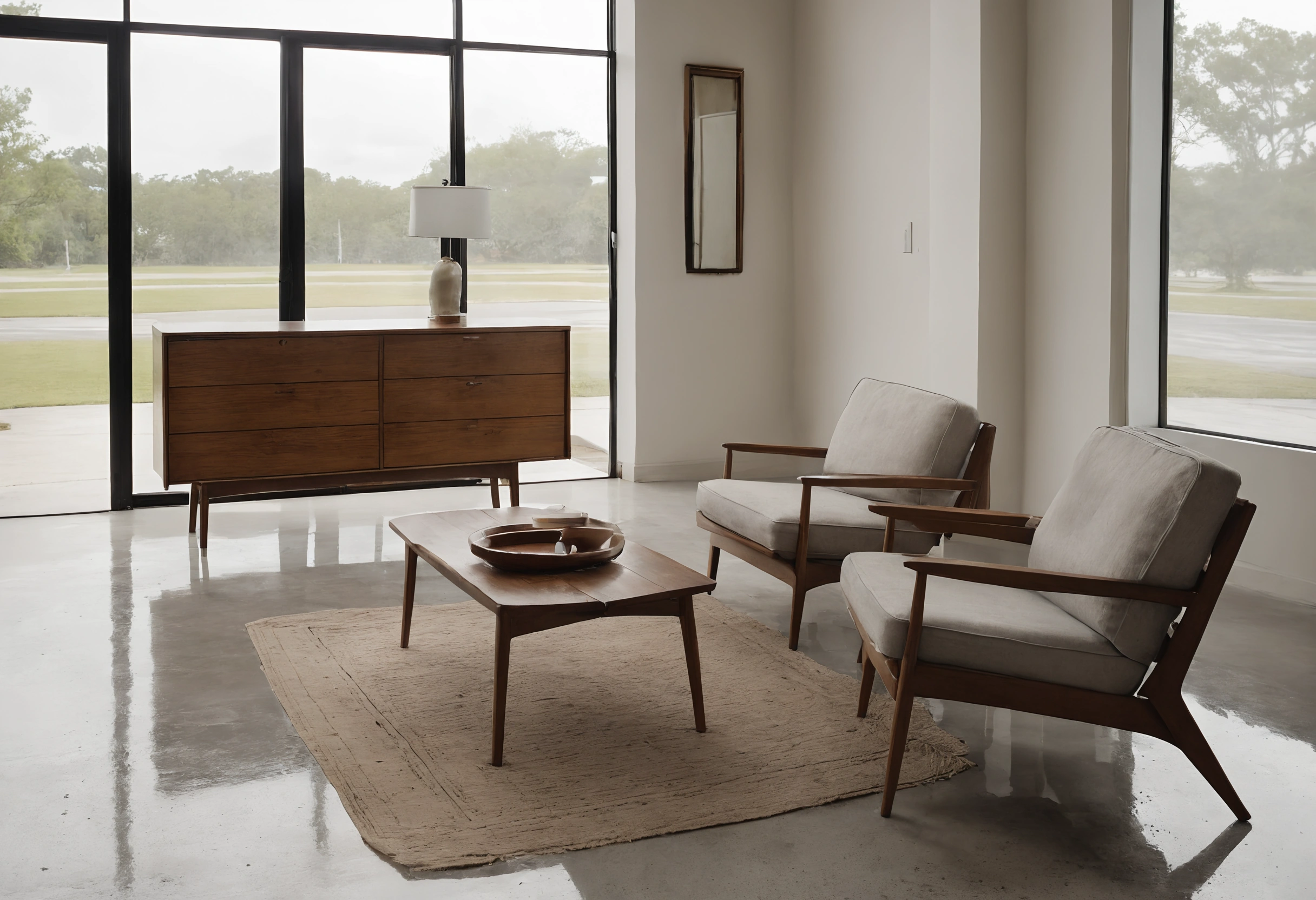
A wet month on the Gulf coast puts every wood and upholstered piece in the house to the test. NOAA daily summaries record 5.06 inches of rain at Tampa International Airport from October 1 to 20, 2026, as much as fell in all of September. Solomia Home, a luxury furniture Dubai showroom stocking Italian brands including Flexform, B&B Italia and Boffi, is the new-furniture end of the same market. For Clearwater and St Petersburg homeowners, the useful question is what that moisture does to a dresser, a table or a sofa, and how to catch damage early, before you bring a piece to our Clearwater and St Petersburg consignment furniture store or buy one.
Buyers browsing available consignment inventory can put the same questions to any piece after a wet season. The advice here rests on guidance from the US Forest Service, the National Park Service and the Environmental Protection Agency.
- Put a humidity meter in the room where the piece lives and keep it between 30 and 50 percent.
- Dry anything wet within 24 to 48 hours, before mold gets a start.
- Pull drawers, check veneer edges and smell the back panel before you consign or buy.
- Keep air conditioning running through rainy weeks instead of switching it off.
Why does Florida humidity move wood?
Wood is never fully dry. According to the US Forest Service Wood Handbook, it settles at an equilibrium moisture content set by the surrounding air, and it swells and shrinks as that content changes below about 30 percent. When the air in a room turns humid, every board, drawer front and table leaf takes on water.
The handbook gives the numbers: at 80 F, wood in air at 30 percent relative humidity settles at 6.1 percent moisture, and in air at 70 percent it settles at 12.9 percent. That swing is the reason wood furniture is happiest in a room with steady, moderate humidity, and the reason a piece stored in a damp garage is a risk worth checking.
How do humidity limits differ for furniture and for rooms?
Rooms and furniture have slightly different targets. The EPA says to keep indoor humidity below 60 percent and ideally between 30 and 50 percent, and it notes that a moisture or humidity meter costs $10 to $50 at many hardware stores. For wooden objects, the National Park Service Museum Handbook names 45 to 55 percent as the ideal and says humidity must never exceed 65 percent.
| Relative humidity | Wood moisture content | What it means for furniture |
|---|---|---|
| 30 percent | 6.1 percent | Below 30 percent, glue can dry out and joints loosen |
| 50 percent | 9.1 percent | Middle of the 45 to 55 percent museum range |
| 60 percent | 10.8 percent | EPA ceiling for indoor air |
| 70 percent | 12.9 percent | Above this, mold and insects may become problems |
| 80 percent | 15.7 percent | Glue may weaken and hardware will corrode |
| 90 percent | 20.2 percent | Wood fibers swell excessively |
What does moisture do to veneer and finishes?
Veneer is a thin layer of decorative wood glued to a solid base, and fluctuating humidity damages it because the layers expand and contract along different planes. The National Park Service says a rise from 30 to 70 percent humidity can make wood expand as much as 2 percent across the grain, enough for a 2-foot panel to grow almost 1/2 inch and split.
The same handbook points to the lower rails of chests and sideboards as the most vulnerable spots. When the wood underneath shrinks, a lip of veneer forms along the edge, and a drawer or a dust cloth can snag it and tear it off. Above 70 percent humidity the handbook adds that finishes may bloom and hardware will corrode. Run a hand along the bottom edge of any case piece before you buy or consign it.
How do you check a second-hand piece for moisture damage?
Start with your nose. The EPA lists a moldy odor as a sign of hidden moisture, and mold can grow on porous materials and fill their crevices, so it may be impossible to remove completely. Open every drawer, smell the inside of cabinets and look at the back panel, where condensation collects against a wall. Press along veneer edges for bubbles or lifting.
On upholstered pieces, check the underside of cushions, the dust cover and the frame corners for stains and damp. The National Park Service guidance on upholstered furniture notes that humidity above approximately 65 percent can cause mold to grow on and deteriorate textiles, and that it promotes oxidation of metal parts such as tacks. The EPA says porous materials such as carpet may have to be thrown away once moldy, and it recommends a specialist for any item that is expensive or of sentimental value. Photograph what you find before the piece moves, and ask about delivery and pickup so the piece travels dry.
What should you do when a piece gets wet?
Speed matters. The EPA says that when wet or damp materials are dried within 24 to 48 hours after a leak or spill, in most cases mold will not grow. Move the piece away from the source of water, keep air moving around it and keep the air conditioner or dehumidifier running.
Do not switch the air conditioning off at night: the National Park Service warns that rapid changes in humidity can cause severe damage to furniture. Do not scrub a lifting veneer edge with a wet cloth. The EPA recommends consulting a specialist in furniture repair and restoration for any item that is expensive or of sentimental value.